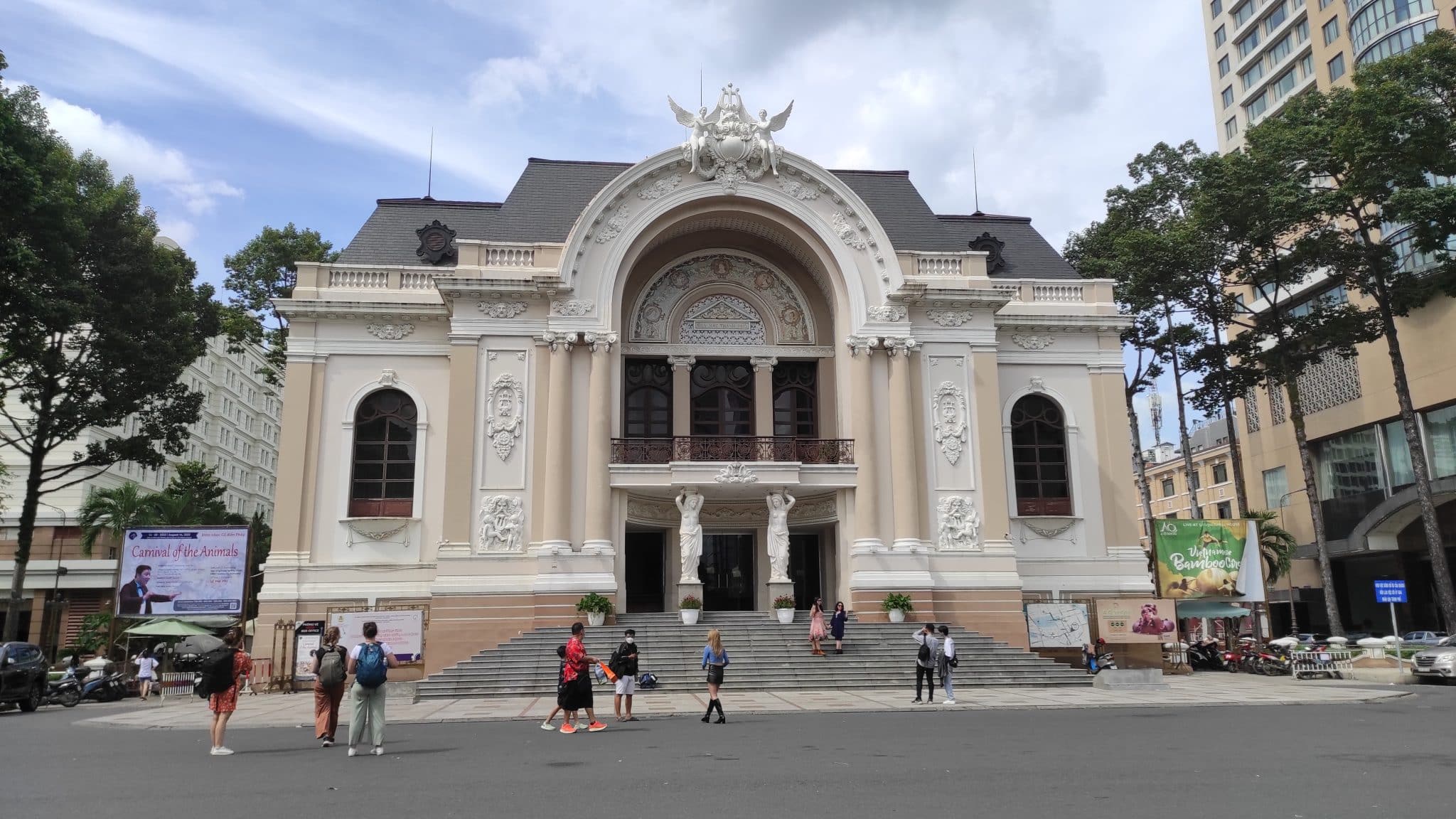
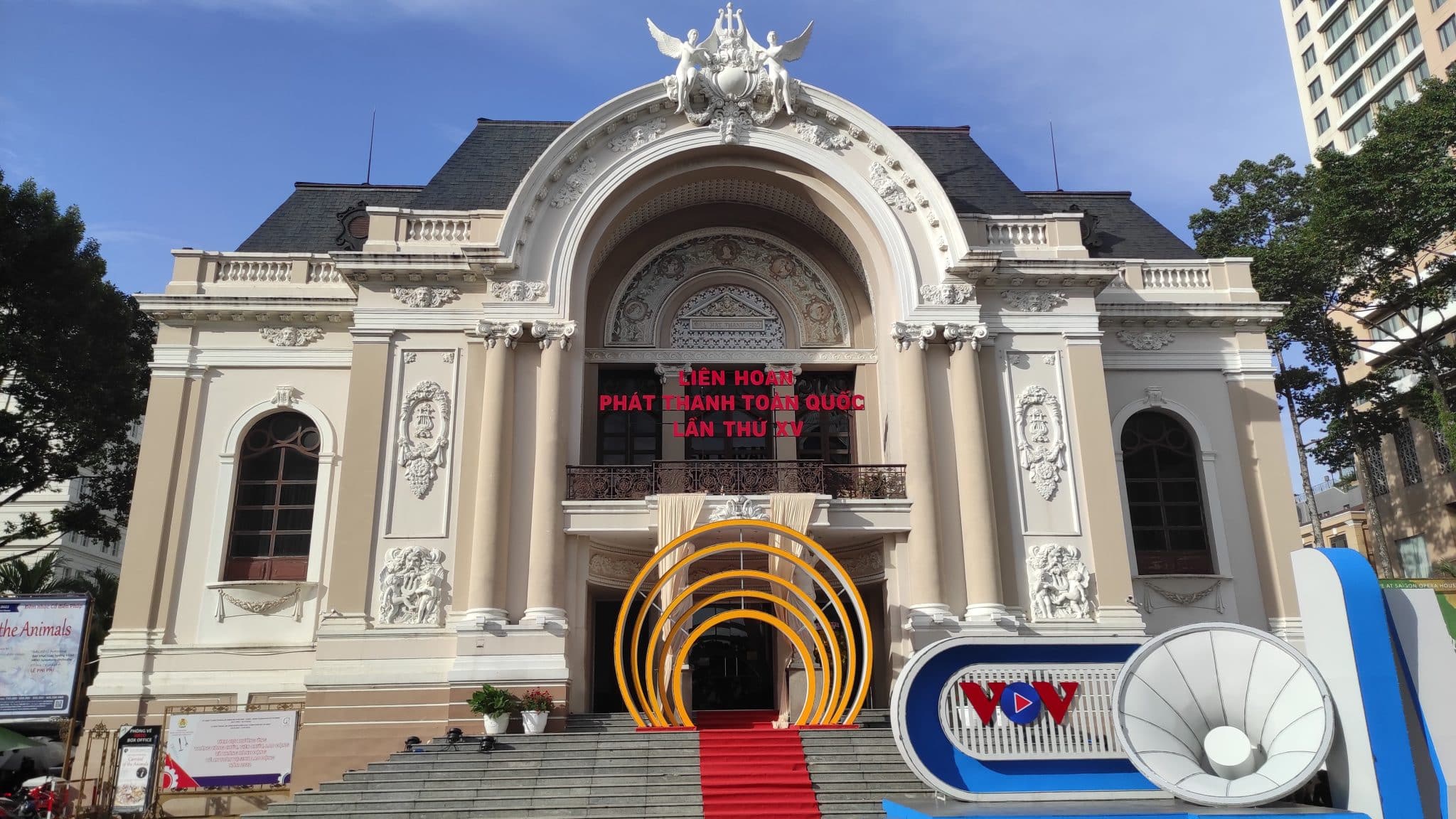
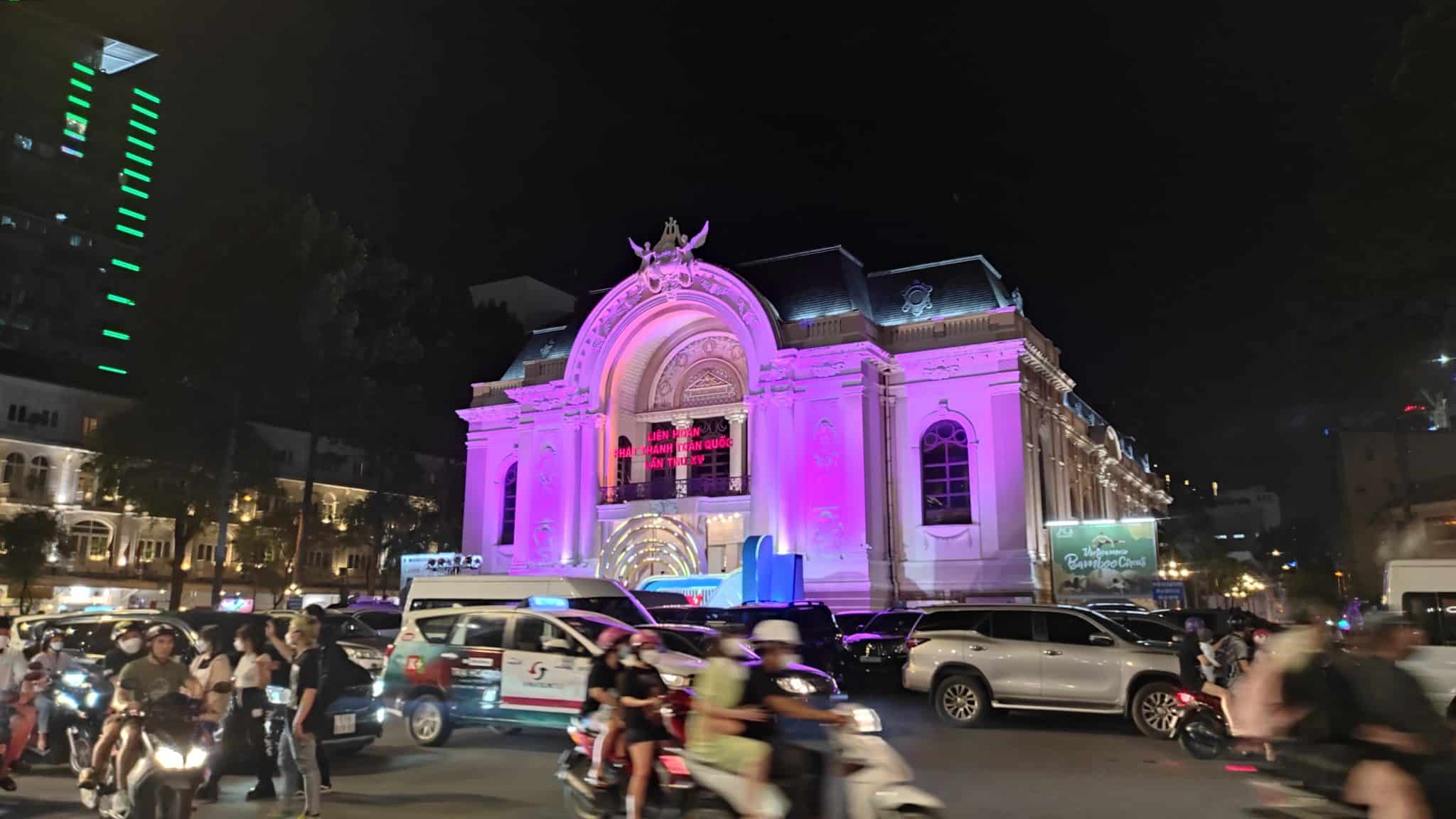
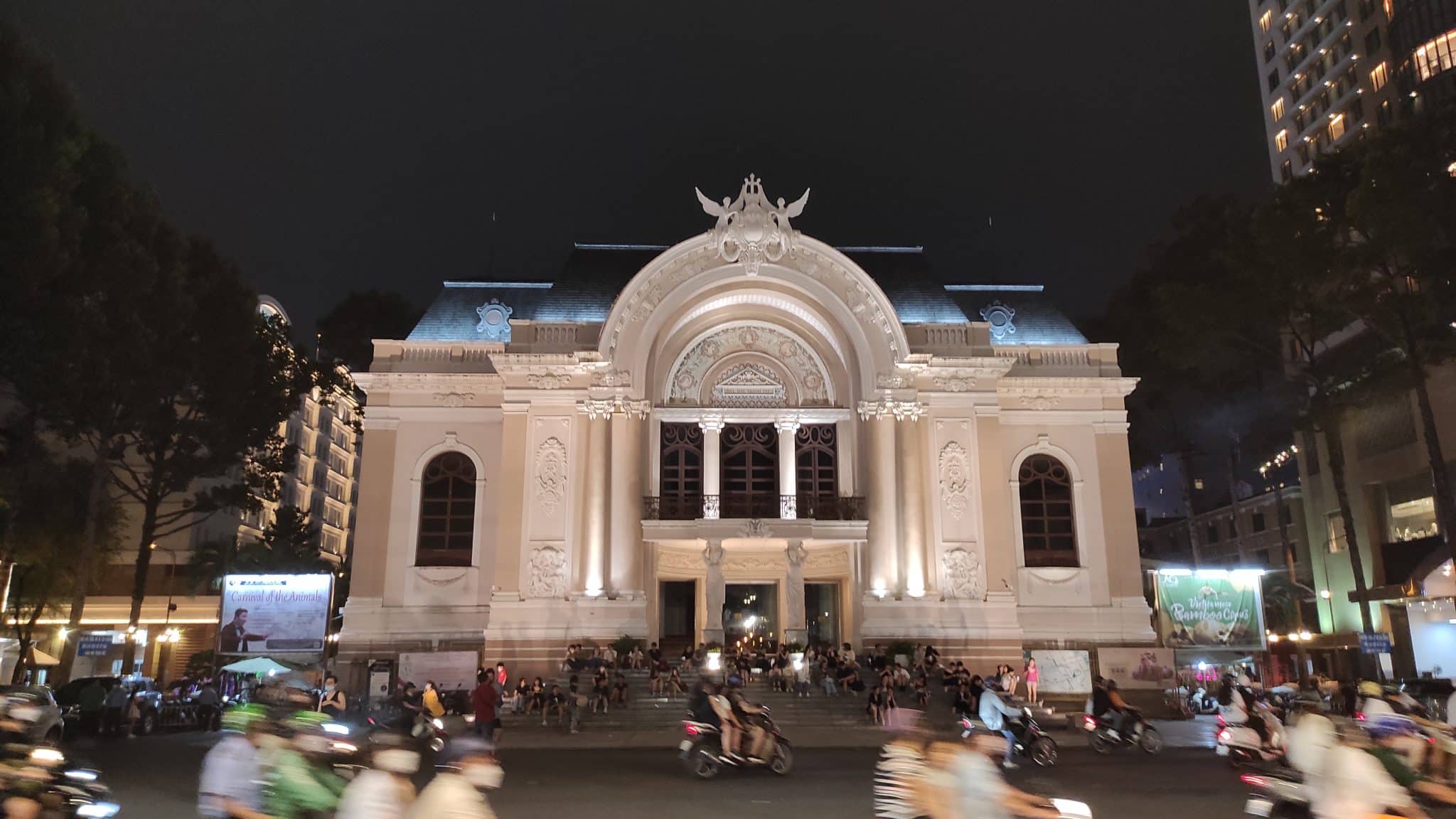
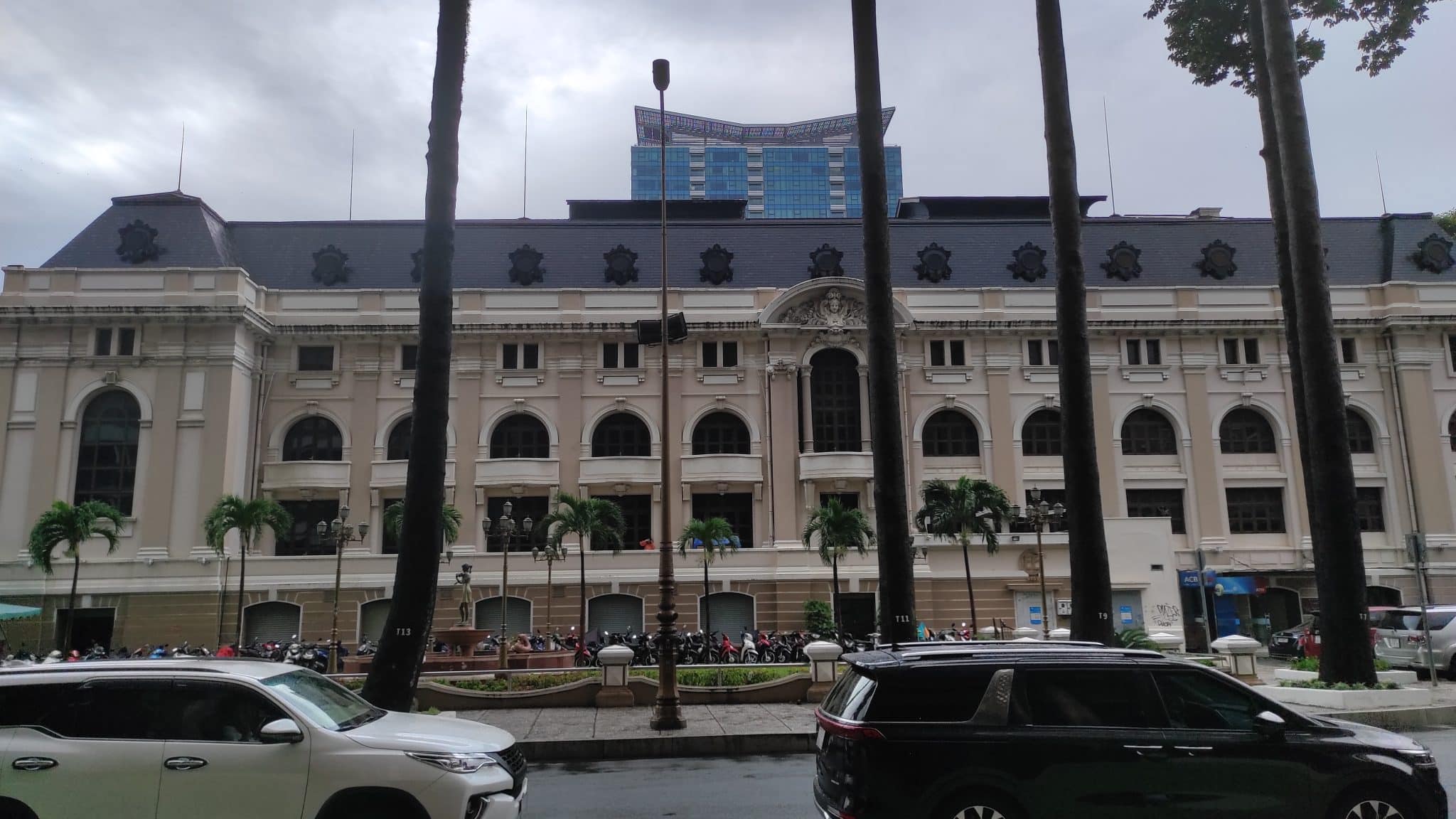
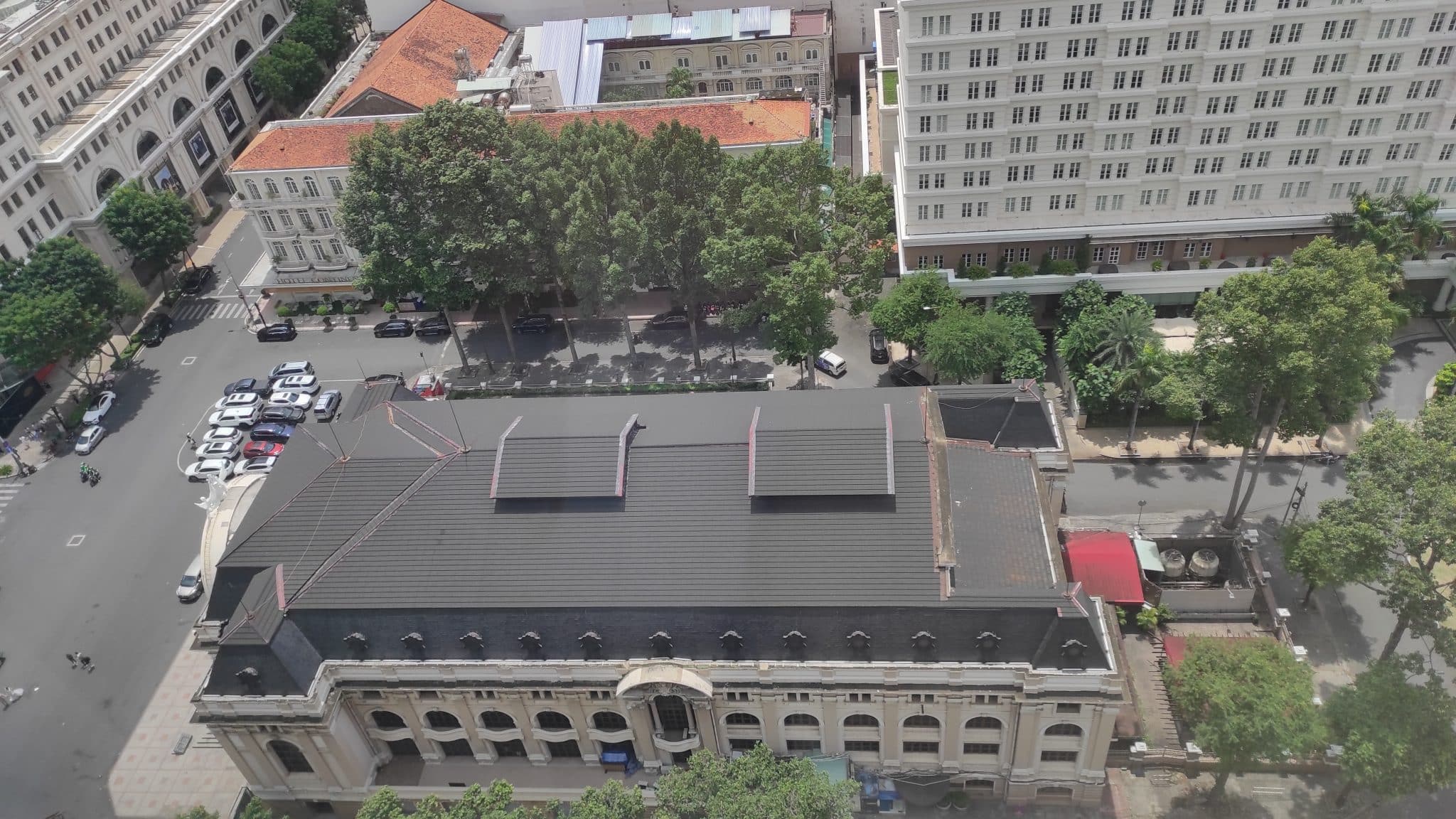
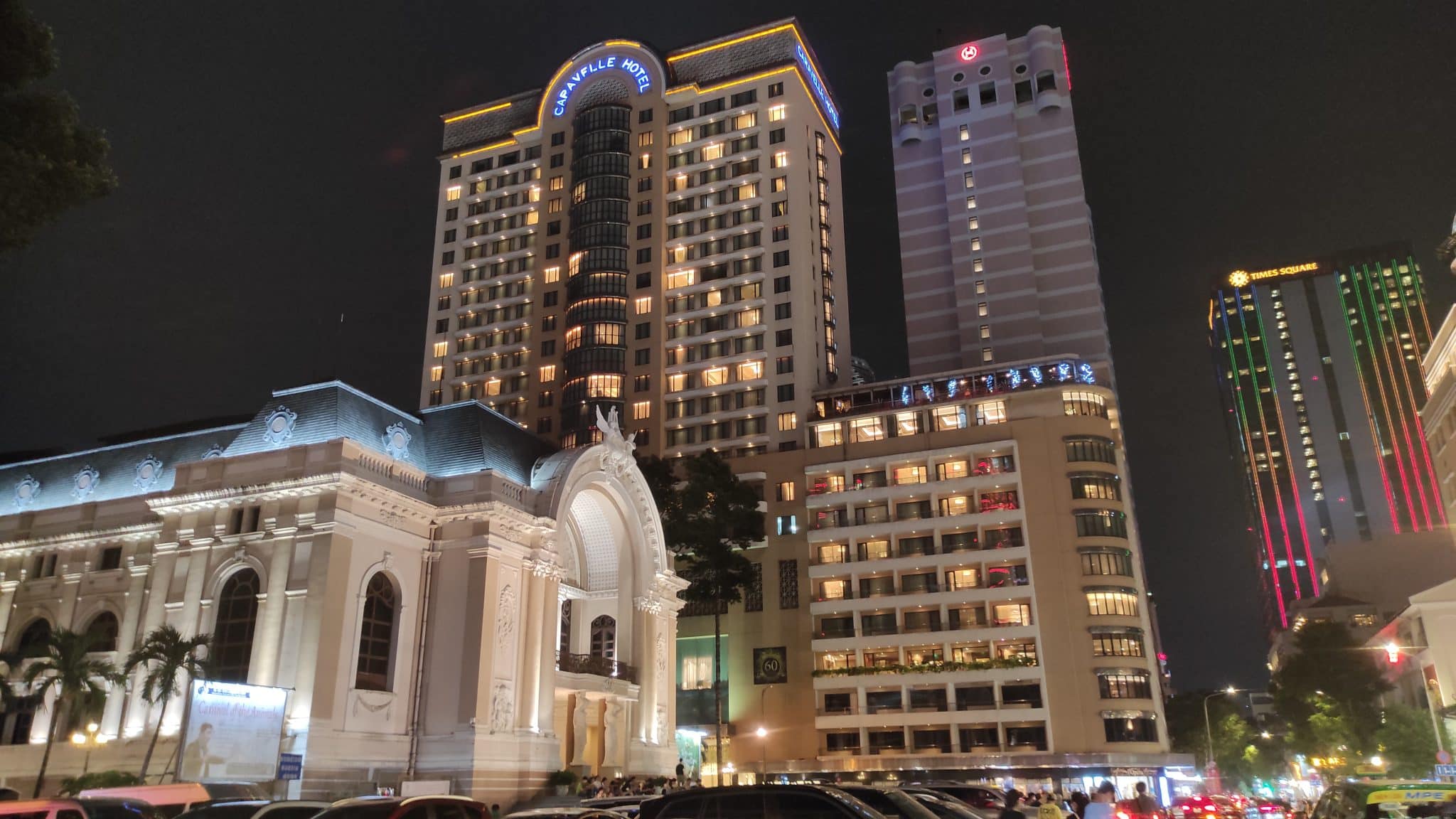
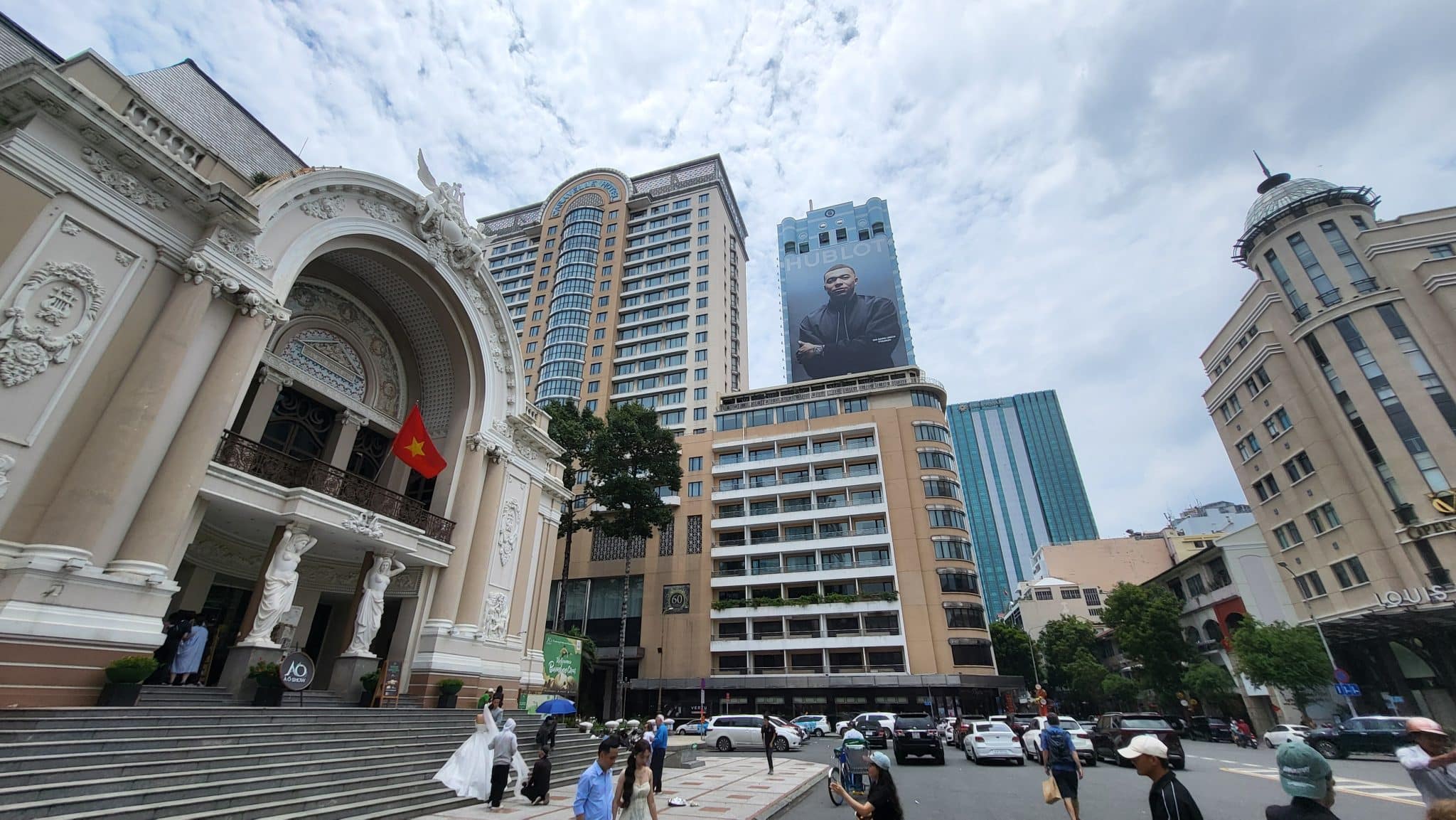
The Saigon Opera House, also known as the Municipal Theatre of Ho Chi Minh City, was constructed between 1900 and 1909 during the French colonial period in Vietnam. Designed by French architect Eugène Ferret, the opera house served as a cultural and entertainment center for the colonial administration and local elite, showcasing European performing arts, music, and theater to the Vietnamese and expatriate communities in Saigon.
Architecture:
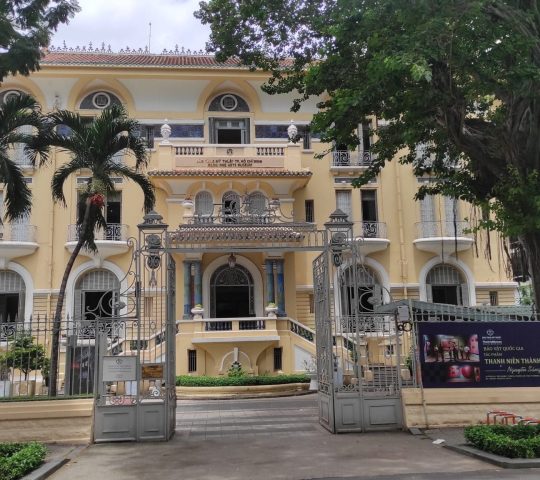
- French Colonial Style: The Saigon Opera House features a stunning blend of French Colonial architectural elements with neoclassical influences, characterized by its symmetrical façade, grand columns, ornate balconies, and elegant archways that reflect the architectural styles and design principles prevalent during the late 19th and early 20th centuries in France and its colonial territories.
- Facade and Exterior: The opera house’s exterior showcases a magnificent façade adorned with intricate details, decorative motifs, sculptures, and reliefs that highlight its historical, cultural, and artistic significance as a symbol of French colonial architecture and Vietnamese heritage. The building’s harmonious proportions, balanced symmetry, and elegant design elements contribute to its aesthetic appeal, grandeur, and architectural significance as a cultural landmark in Ho Chi Minh City.
- Interior Design: The Saigon Opera House’s interior features a lavish and opulent design, with a grand staircase, marble floors, crystal chandeliers, gold accents, velvet curtains, and ornate decorations that create a luxurious and immersive environment for performances, events, and gatherings. The auditorium’s acoustics, seating arrangement, stage design, and architectural details reflect the opera house’s commitment to providing an exceptional and memorable experience for artists, performers, and audiences alike.
- Cultural Heritage: The Saigon Opera House’s architecture and design encapsulate its historical, cultural, and architectural heritage as a colonial-era institution and cultural landmark in Ho Chi Minh City. The building’s preservation, restoration, and adaptive reuse as a performing arts venue, cultural center, and tourist attraction reflect its enduring legacy, significance, and value as a symbol of Vietnam’s rich history, cultural diversity, and architectural heritage.