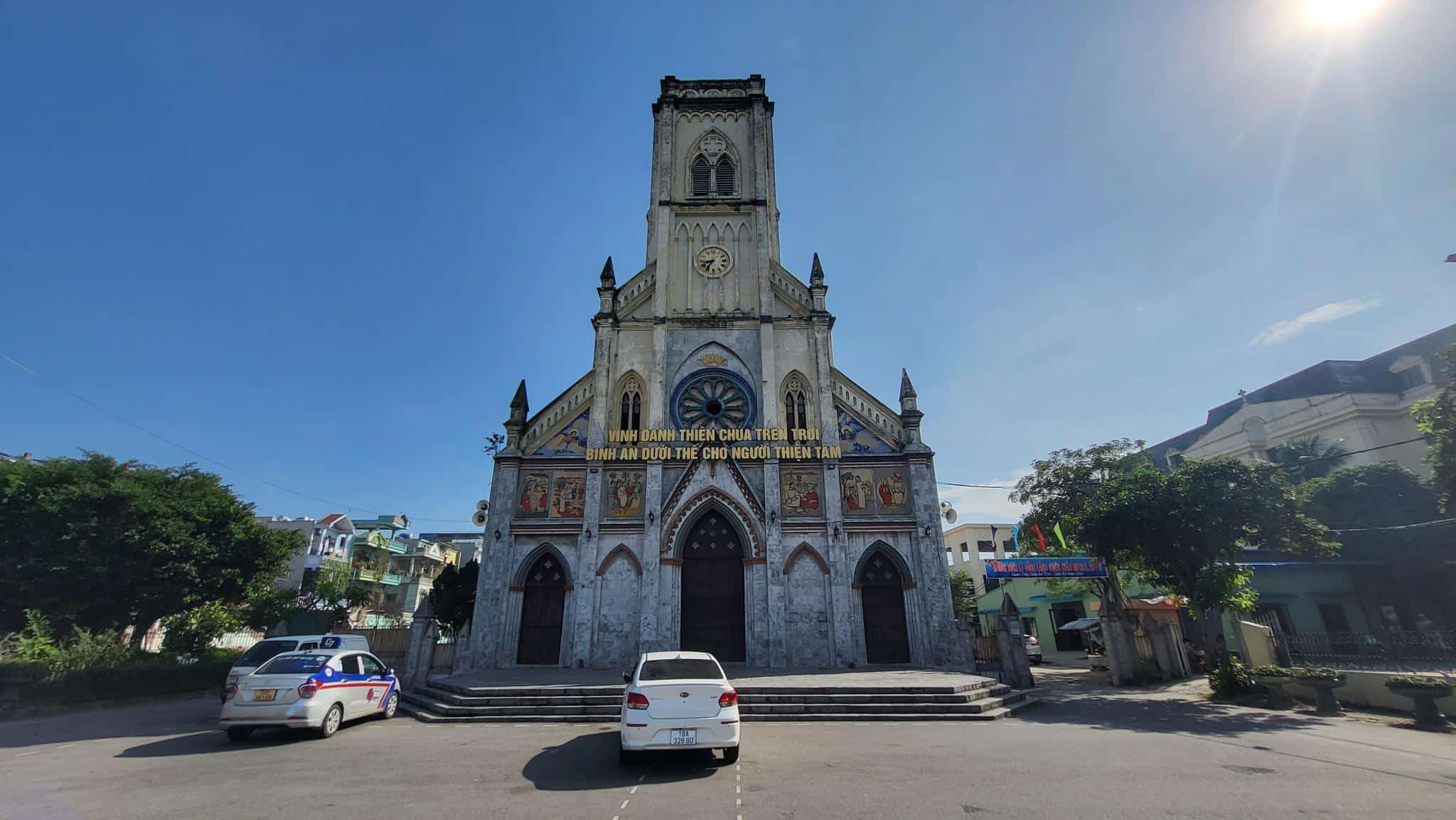
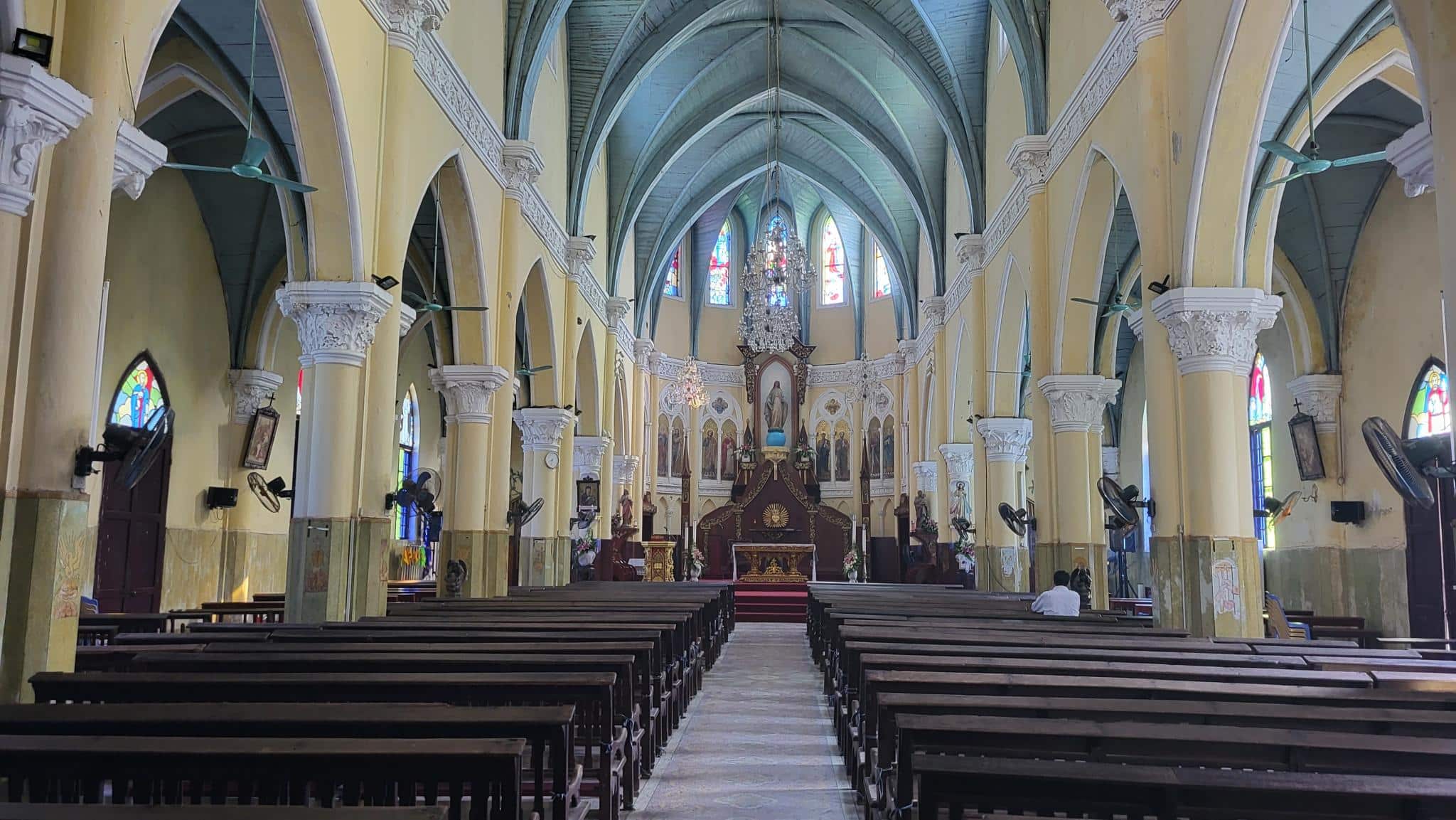
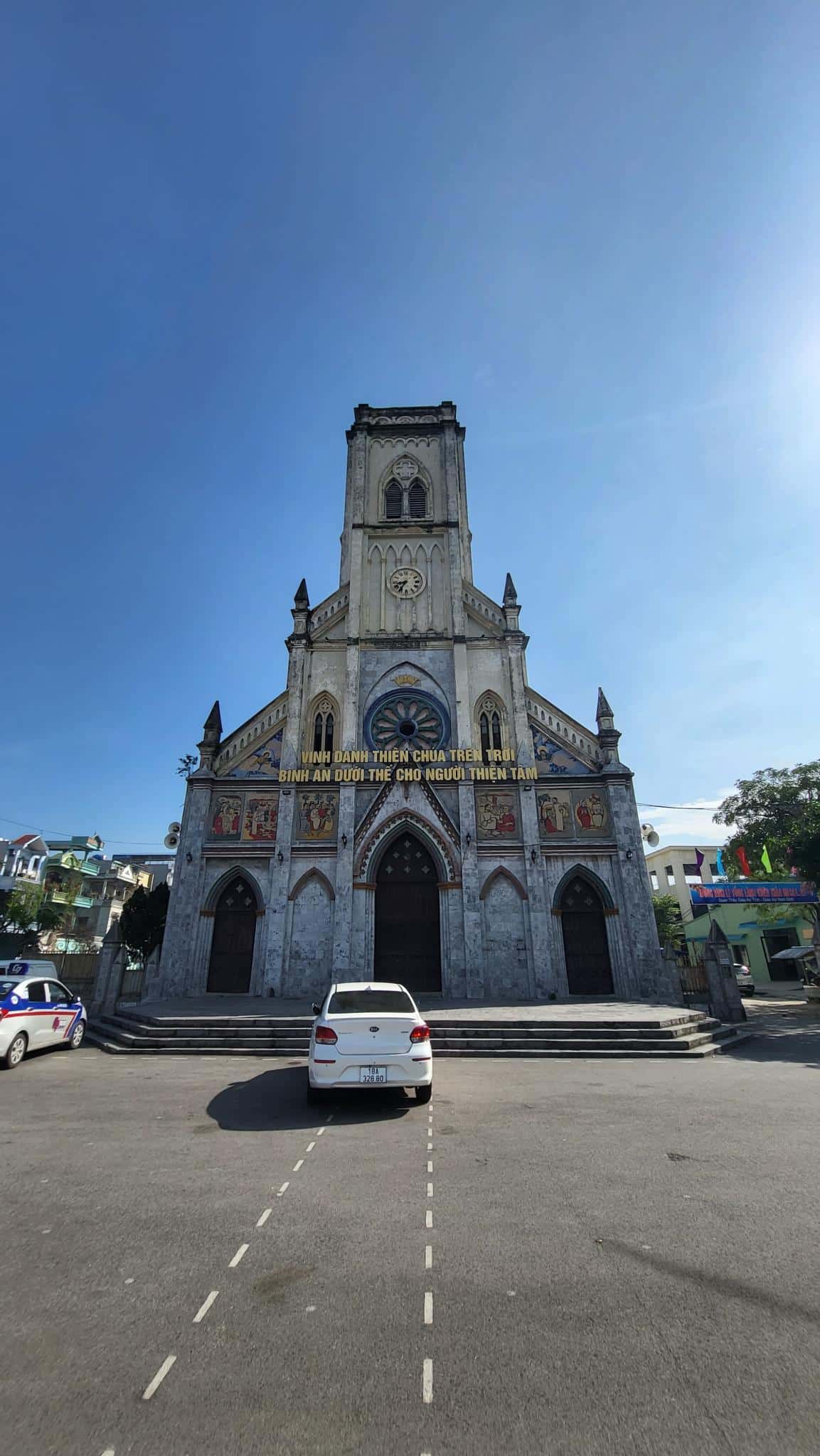
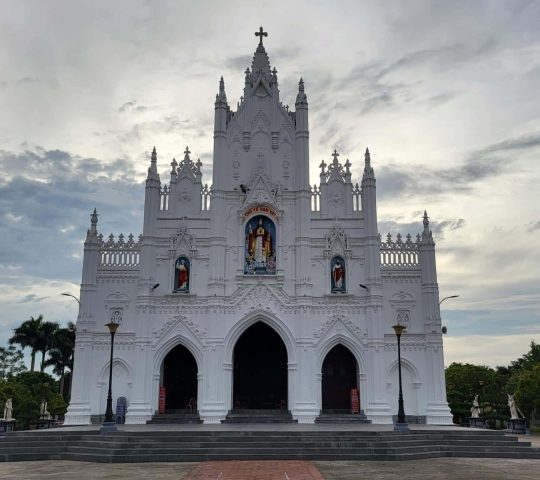
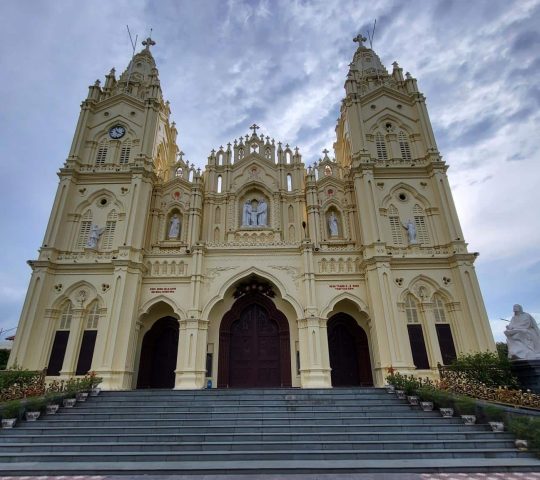
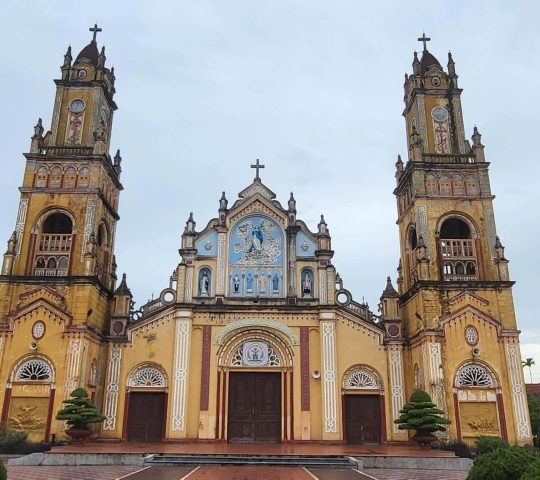
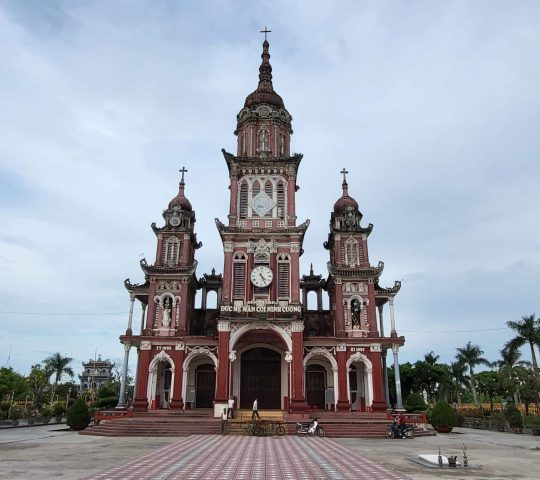
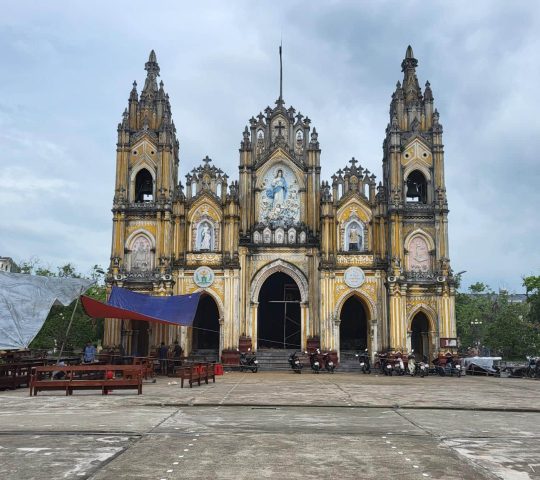
The Nam Định Cathedral, also known as the Queen of the Holy Rosary Cathedral (Nhà thờ Chính tòa Nữ Vương Thánh Rosario), is a prominent Catholic church located in Nam Định City, the capital of Nam Định Province in northern Vietnam. Here’s an overview of the cathedral’s history, architecture, and significance:
History:
- Colonial Era Influence: The Nam Định Cathedral was constructed during the late 19th and early 20th centuries, a period characterized by French colonial rule in Vietnam. The cathedral’s construction reflects the influence of French architectural styles, religious practices, and cultural traditions prevalent during the colonial era.
- Catholic Community: The cathedral serves as a spiritual, cultural, and social center for the local Catholic community in Nam Định Province, fostering religious devotion, community solidarity, and cultural identity among parishioners, clergy, and visitors who gather for worship, prayer, sacraments, and celebrations within the cathedral’s sacred, historical, and communal spaces.
Architecture:
- Architectural Style: The Nam Định Cathedral features Neo-Gothic architectural style, characterized by pointed arches, ribbed vaults, flying buttresses, stained glass windows, and ornate decorations that reflect European influences, religious symbolism, and artistic expressions prevalent in Catholic church design during the late 19th and early 20th centuries.
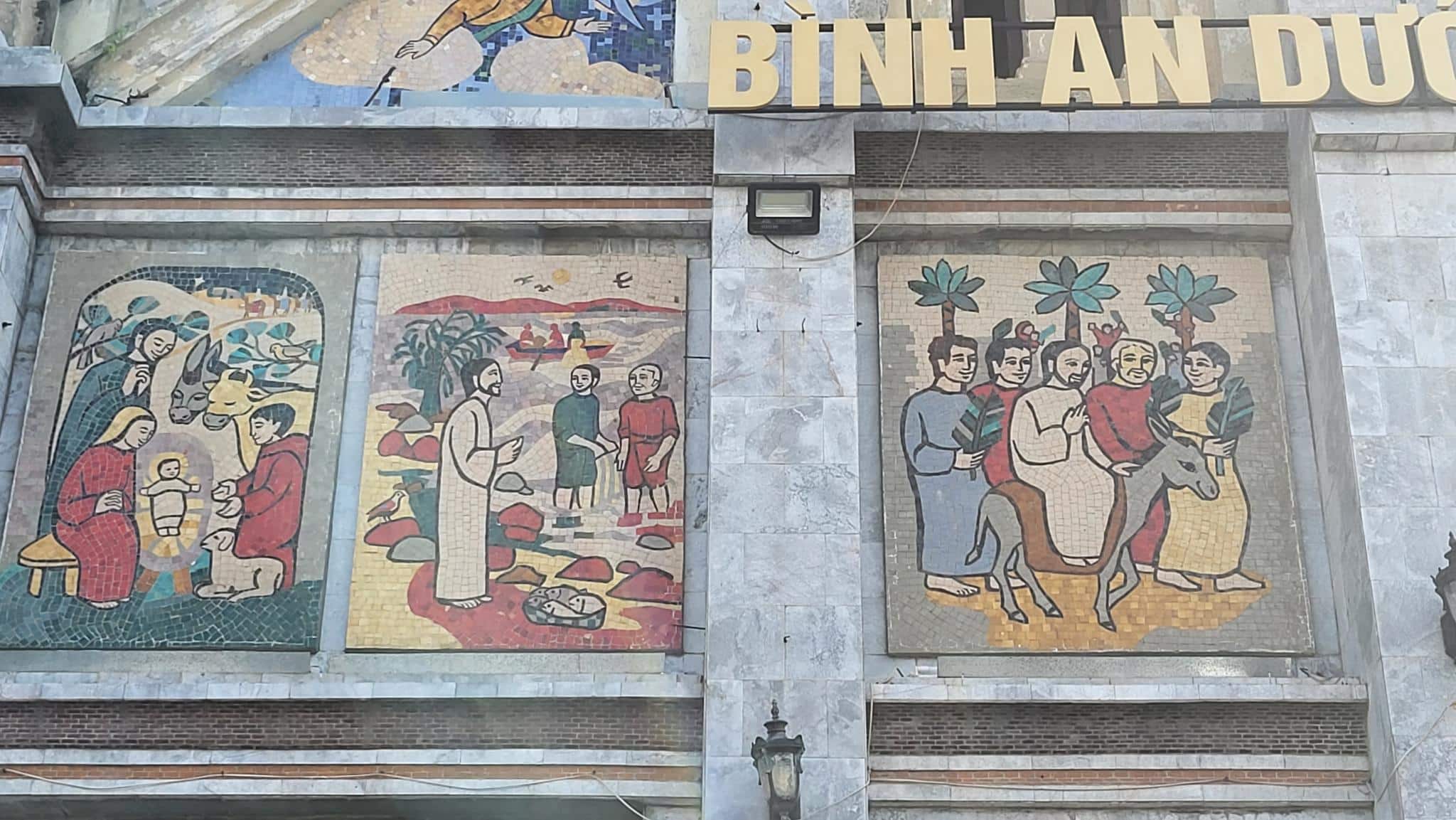
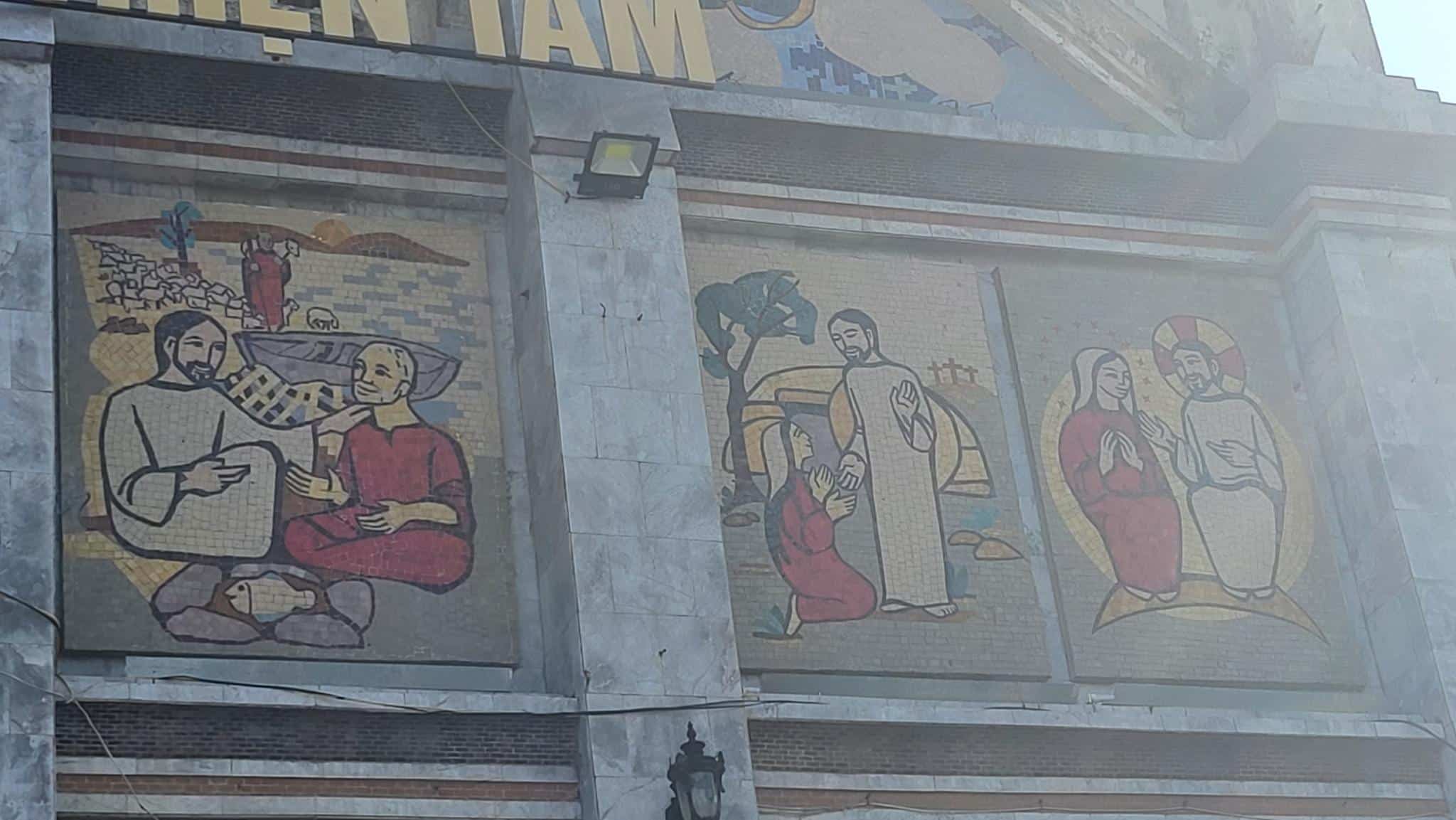
- Structural Elements: The cathedral’s exterior façade, interior nave, sanctuary, chapels, and bell towers showcase intricate craftsmanship, artistic detailing, and architectural elements that emphasize spiritual symbolism, aesthetic beauty, and functional design within the context of religious worship, community gatherings, and cultural celebrations associated with the Catholic faith.
- Historical Preservation: The Nam Định Cathedral has undergone restoration, conservation, and preservation efforts to maintain its structural integrity, historical authenticity, and cultural significance as a religious monument, architectural landmark, and community symbol within Nam Định Province and broader Vietnamese society. These efforts reflect the cathedral’s importance as a historical, cultural, and spiritual institution that continues to inspire reverence, respect, and remembrance among generations of Catholics, visitors, and enthusiasts interested in exploring Vietnam’s religious heritage, architectural beauty, and cultural diversity.
Significance:
- Cultural Landmark: The Nam Định Cathedral serves as a cultural landmark and historical monument that reflects Vietnam’s religious diversity, architectural heritage, and colonial history within the context of Catholicism’s influence, contributions, and impact on the country’s spiritual, social, and cultural development during the late 19th and early 20th centuries.
- Community Engagement: The cathedral plays a pivotal role in fostering community engagement, social outreach, and charitable activities through religious services, educational programs, healthcare services, and humanitarian initiatives that promote spiritual growth, social justice, and communal solidarity among parishioners, clergy, and residents in Nam Định Province.