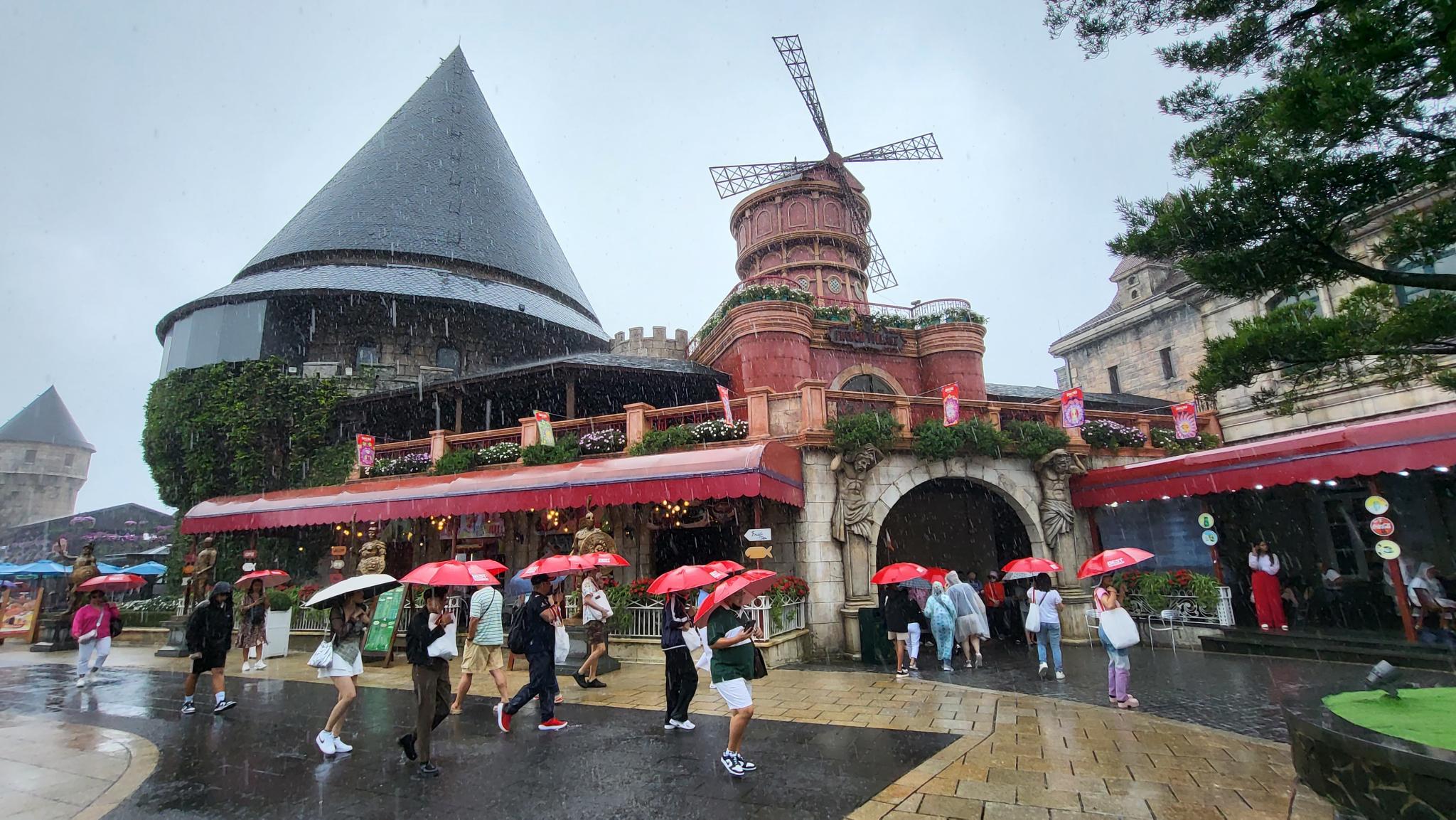
In Vietnam, there are a few places that have a distinct French influence, particularly in their architecture and culture, due to the period of French colonial rule (from the mid-19th century until 1954). One of the most famous examples of a “French village” in Vietnam is Ba Na Hills, but there are also other locations with notable French heritage. Here’s a closer look:
1. Ba Na Hills (Da Nang)
- Location: About 25 kilometers west of Da Nang, in central Vietnam.
- Description: Ba Na Hills is famous for its French-style village, a tourist destination that includes a replica of a medieval French town set atop a mountain. The village features cobblestone streets, a French church, old-style houses, and even a replica of a European village square. The area is part of a large resort that also features the Golden Bridge, a famous pedestrian bridge held by two giant hands. The village here evokes the feeling of a quaint French town in the midst of Vietnam’s stunning natural scenery, blending French colonial nostalgia with modern tourism.
2. Sapa (Lao Cai Province)
- Location: In the northwestern mountains of Vietnam, near the border with China.
- Description: While not strictly a “French village,” Sapa has a clear French influence, particularly in its colonial architecture. The town was a popular summer retreat for French colonial officials in the 19th and early 20th centuries, and many of the buildings still reflect that heritage. The French introduced the construction of villas, churches, and other structures, some of which still stand today, though they have been adapted for modern use. Sapa also has a distinctly European feel due to its cool, misty weather and stunning mountain landscapes.
3. Hoi An
- Location: In central Vietnam, near Da Nang.
- Description: Hoi An’s old town is a UNESCO World Heritage site, and although it is primarily known for its well-preserved ancient architecture, there are also elements influenced by French colonialism. The French left their mark on several of the town’s buildings, particularly in the 19th century, when it was a major trading port. The French influence is evident in some of the town’s larger buildings and the design of its bridges and public structures.
4. Hai Phong
- Location: Northern Vietnam, close to Hanoi.
- Description: Hai Phong is another city with significant French colonial influence. The city was one of the major ports during the French colonial period, and it still retains French-style buildings, particularly in its French Quarter. Some of the city’s grand colonial-era villas and old government buildings still stand, reflecting the architectural style of the period.
5. Dalat (Lam Dong Province)
- Location: In the southern highlands of Vietnam, about 300 kilometers northeast of Ho Chi Minh City.
- Description: Dalat, often referred to as the “City of Eternal Spring,” was developed by the French as a resort town in the 19th century. French colonial villas, churches, and public buildings can still be found in Dalat, along with a cooler climate that made it an ideal summer retreat for French colonizers. The city also has a distinct European atmosphere with its flower gardens, parks, and wide boulevards.
6. Phong Nha (Quang Binh Province)
- Location: Central Vietnam, near the border with Laos.
- Description: Phong Nha, a small village near the famous Phong Nha-Kẻ Bàng National Park, is known for its colonial-era French architecture in the form of old French bridges and houses scattered throughout the area. While the main attraction is the UNESCO World Heritage site of caves and karst landscapes, visitors may notice the French legacy in the town’s older structures.
While there aren’t many “French villages” in the literal sense, there are several places in Vietnam where French colonial influence can still be seen in the architecture, layout, and culture. These towns and regions offer a unique blend of French and Vietnamese heritage, often set in beautiful, scenic landscapes that make them popular tourist destinations.